Deep Bite (Excessive Overbite): Causes, Symptoms, Treatment & When to See an Orthodontist
If you’ve been told that you or your child has a deep bite, you may have noticed that the upper front teeth cover much more of the lower teeth than they should. Also called an excessive overbite or deep overbite, this is one of the most common bite problems orthodontists treat in both children and adults.
While many people assume a deep bite is simply a cosmetic concern, it can also affect your oral health, jaw function, long-term tooth stability, and even the lifespan of your teeth.
Fortunately, modern orthodontic treatment offers highly effective solutions for correcting deep bites. At LA Smile Co. Orthodontics in Glendale, CA, Dr. Henna Kim, a Board Certified Orthodontist, creates customized treatment plans that improve both the appearance and function of your smile.
In this guide, we’ll explain what a deep bite is, what causes it, why treatment matters, and the orthodontic options available to correct it.
What Is a Deep Bite?
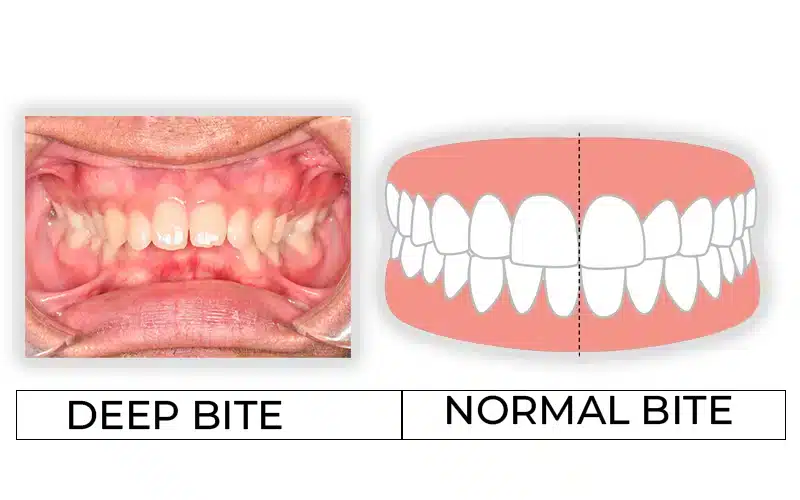
A deep bite occurs when the upper front teeth excessively overlap the lower front teeth vertically.
A normal bite typically has 1–3 mm of vertical overlap, allowing the teeth to function comfortably while protecting the surrounding gums and jaw joints.
With a deep bite:
- The upper front teeth overlap the lower teeth excessively.
- The lower front teeth may bite into the roof of the mouth.
- The upper teeth may contact the lower gum tissue.
- The lower teeth may become hidden when biting together.


Deep bites can range from mild to severe and may involve the teeth alone or underlying jaw growth patterns.
What Causes a Deep Bite?
Several factors can contribute to the development of a deep overbite.
Genetics
Genetics play one of the biggest roles in bite development. Jaw size, facial growth, and tooth positioning are often inherited. Children whose parents have deep bites are more likely to develop one themselves.
Overeruption of the Front Teeth
Sometimes the upper or lower front teeth erupt farther than normal, increasing the amount of vertical overlap between the teeth. This over-eruption of teeth can occur when the lower jaw is more retrusive (set further behind) than the upper jaw, and the front teeth are not able to meet in proper occlusion.
Jaw Growth Pattern
Some people naturally develop a shorter lower facial height and stronger bite pattern, creating a tendency toward excessive overbite.
Tooth Grinding (Bruxism)
Grinding or clenching can wear down the back teeth over time. As these teeth become shorter, the front teeth overlap more deeply, worsening the bite.
Missing Teeth
Loss of back teeth reduces support for the bite, allowing the front teeth to overlap excessively.
Signs and Symptoms of a Deep Bite
Not everyone experiences symptoms, but common signs include:
- Upper teeth covering most of the lower teeth
- Lower teeth contacting the roof of the mouth with potential damage to the palate
- Upper teeth biting into the lower gums with potential damage to the gums
- Worn or flattened front teeth
- Chipped or fractured teeth
- Jaw discomfort or muscle fatigue
- Difficulty chewing comfortably
- Speech changes in some cases
Why Should a Deep Bite Be Treated?
A deep bite affects far more than appearance.
Without treatment, excessive overbite can contribute to:
- Excessive tooth wear
- Gum recession
- Chipped or fractured teeth
- Jaw pain and TMJ symptoms
- Difficulty chewing
- Increased stress on the teeth
- Reduced long-term stability after orthodontic treatment
Correcting a deep bite helps protect your teeth, improve your bite, and create a healthier, more stable smile.
How Is a Deep Bite Treated?
The ideal treatment depends on:
- Your age
- Growth pattern
- Severity of the bite
- Whether the problem is caused by the teeth, jaws, or both
Every patient receives a customized treatment plan after a comprehensive orthodontic evaluation.
Braces for Deep Bite Correction
Traditional braces remain one of the most predictable ways to correct moderate to severe deep bites.
Braces allow orthodontists to precisely control tooth movement while using specialized bite-opening mechanics to gradually reduce excessive overlap.
Braces are often recommended for:
- Severe deep bites
- Skeletal bite discrepancies
- Significant crowding
- Complex tooth movement
Additional appliances such as bite turbos, bite plates, or temporary anchorage devices (TADs) may be used when appropriate to improve efficiency and protect the teeth during treatment.
Invisalign and Clear Aligners for Deep Bite
Today’s clear aligner technology can successfully treat many deep bites when treatment is planned by an orthodontist.
Using carefully engineered tooth movements, clear aligners can improve both tooth alignment and bite function while offering the convenience of removable aligners.
For more complex cases, additional orthodontic appliances or hybrid treatment may be recommended to achieve the best result.
Early Orthodontic Treatment for Children
Children with developing deep bites may benefit from Phase I orthodontic treatment.
Early treatment can:
- Guide jaw growth
- Improve eruption of permanent teeth
- Reduce excessive tooth wear
- Minimize future bite problems
- Reduce the need for more complex treatment later
Early orthodontic evaluations allow problems to be identified before they become more difficult to correct.
How Long Does Deep Bite Treatment Take?
Treatment time varies depending on the severity of the bite.
Typical treatment times include:
- 12–18 months for mild to moderate deep bites
- 18–24 months for more significant cases
- 24–30 months for complex skeletal discrepancies
Modern digital orthodontics allows treatment to be more precise and efficient than ever before.
Why Seeing an Orthodontist Matters
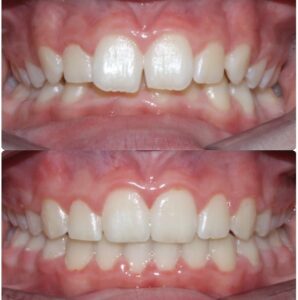
Correcting a deep bite involves much more than simply straightening teeth.
Successful treatment requires careful management of:
- Bite mechanics
- Jaw relationships
- Tooth movement
- Gum health
- Bone support
- Long-term stability
Orthodontists complete years of additional specialty training focused exclusively on tooth movement and bite correction.
Improper treatment planning can lead to problems such as:
- Flared lower front teeth
- Excessively tipped upper teeth
- Posterior open bites
- Gum recession
- Incomplete correction
- Longer treatment times
- Relapse after treatment
Because every deep bite is different, identifying the underlying cause is essential for creating a stable, healthy bite that lasts.
At LA Smile Co. Orthodontics, Dr. Henna Kim develops individualized treatment plans designed to produce healthy, functional, and beautiful smiles while preserving the long-term health of the teeth, gums, jaw joints, and airway.
Can a Deep Bite Return After Treatment?
Like many orthodontic problems, deep bites have a natural tendency to relapse over time.
Muscle forces, facial growth, and everyday biting patterns can gradually cause the bite to deepen again.
For this reason, wearing retainers exactly as instructed is one of the most important parts of maintaining your orthodontic results.
Frequently Asked Questions About Deep Bite Treatment
Is a deep bite the same as an overbite?
A deep bite is a type of overbite. While everyone has a small amount of overbite, a deep bite refers to excessive vertical overlap of the upper and lower front teeth.
Can Invisalign fix a deep bite?
Yes. Many mild to moderate deep bites can be treated successfully with Invisalign when treatment is carefully planned by an orthodontist. More complex cases may require braces or additional orthodontic appliances.
Does a deep bite get worse with age?
It can. Tooth wear, grinding, missing teeth, and natural aging can gradually make a deep bite more severe if left untreated.
Is deep bite treatment painful?
Most patients experience only mild soreness for a few days after adjustments or changing aligners. This discomfort is temporary and generally well tolerated.
At what age should a child be evaluated?
The American Association of Orthodontists recommends that children have their first orthodontic evaluation by age 7. Early evaluation allows developing bite problems, including deep bites, to be identified before they worsen.
Schedule a Deep Bite Consultation in Glendale, CA
If you think you or your child may have a deep bite, early evaluation can make treatment simpler and help prevent future dental problems.
At LA Smile Co. Orthodontics, Dr. Henna Kim provides personalized, airway-conscious orthodontic care using braces, clear aligner therapy, and modern orthodontic techniques designed to create healthy, functional, lifelong smiles.
Whether your concern is tooth wear, jaw discomfort, bite alignment, or improving your smile, we’re here to help determine the best treatment option for you.
Schedule your complimentary orthodontic consultation today and learn how deep bite treatment can improve your oral health, bite function, and confidence.